Wednesday, 23 May 2012

Lec 3


What is a vector image?
Vector images are mathematical formulas. Because mathematics can be easily scaled, a vector image can be endlessly resized from without losing the quality or crispness of the image.
Common formats are AI, EPS and SVG.

Fonts are a prefect example of vector images. No matter how large the font is, it will always look sharp.
Vector images are generally filled with a solid colour or a gradient but it can't display the lush colour depth of a raster.

vector


What is a raster image?
A raster image (also called bitmap) is a way to represent digital images. They are .gif, .jpg, bmp, tiff, png files. 

When a raster image is created, the image on the screen is converted into pixels.
Each pixel is assigned a specific value which determines its colour. 

Raster image system uses the RGB colour system.
When a raster image is viewed, the pixels smooth out visually for the user, who sees a photograph or drawing. When it's blown up, the pixels in a raster image become apparent.

pixelated


What is a diagram?
A diagram is a figure and it usually consists of a line drawing, made to accompany and illustrate a geometrical theorem, mathematical demonstration etc.
It outlines and explains the parts, operation on a chart, plan or a scheme of a subject.


What matters most in high quality rendering?
Probably the material/texture is the thing that matters the most in high quality rendering. The texture is something that is directly seen from the rendered document and as it get more detailed and realistic the rendering will have higher quality. However, the lighting also matter a lot in high quality rendering so I cannot say easily what is the most important element in high quality rendering.


What is a digital rendering?
It is a process that involves using a software program to generate an image from a previously created model. 
Digital rendering description includes viewpoint, geometry, lighting, and texture information.
The image that is created through digital rendering is referred to as a digital image or a raster image. 
The image made through digital rendering is the last major step before creating the final appearance of models used in animation.
This animation is used in movies, video games, computer games, and simulators, and for special effects on television.

Features included in digital rendering are:

  • Shading: brightness and colour
  • Bump-mapping: simulated small scale bumpiness
  • texture-mapping: method for applying detail
  • Reflection: mirror like image
  • Motion blur: the effect of blurriness from a fast moving object
  • Fogging: the way light dims when it passes through air or atmosphere that is not clear 
  • Transparency: transmission of light through solid objects
  • translucency: scattered transmission of light through solid objects
  • Refraction: bending of light used with transparency
  • Shadows: effect created by obstructing light
  • Soft shadows: effect created by obstructing light
  • Depth of field: blurry appearance of object because it is too far forward or behind to be in focus    


Who is Cameron Sinclair?
Cameron Sinclair (b. 1973, London, England) is the co-founder and 'chief eternal optimist' (CEO) for Architecture for Humanity, a charitable organization which seeks architectural solutions to humanitarian crisis and brings professional design services to communities in need. He prototyped a building called the porchdog in Second Life lead by the Architecture in Virtual Worlds community. For more information: http://archvirtual.com/2010/06/24/construction-of-hurricane-katrina-relief-project-the-porchdog-prototyped-in-second-life-now-complete/


Who is Toyo Ito?
Toyo Ito (伊東 豊雄, Itō Toyo, born June 1, 1941) is a Japanese architect known for creating conceptual architecture, in which he seeks to simultaneously express the physical and virtual worlds. He is a leading exponent of architecture that addresses the contemporary notion of a "simulated" city, and has been called "one of the world's most innovative and influential architects."


What is Sendai Mediatheque?
Sendai Mediatheque is a library in Sendai, Miyagi Prefecture, Japan. It was designed by Toyo Ito in 1995 and completed in 2001.
The structure of the Sendai Mediatheque is composed of three main elements: tubes, plates and skin.
The plates (floor slabs) are composed of a layer of lightweight concrete sandwiched between steel skins. The concrete interior layer is essentially a honeycomb structure which allows the plate to span between irregularly spaced vertical supports without beams, and with minimal thickness of the slab itself. Each floor hosts a different set of the building’s many facilities which are more or less free to interact with each other over the surface of a given plate.
The skin, or facade treatment differs on all five exposed sides of the building, modulating light and views, creating a uniformity across each face of the cube during the day. The main (south-facing) facade is double-glazed and functions as part of the building’s climate control system. The materials which compose the skin range from glass, to steel panels, to aluminium mesh.
.
 

L3: 3 Journals


Access by design

Mannion,Fiona. "Planning for the future." Access by design volume, no. issue126 (Spring 2011): pages

 The journal regularly features design sheets, building studies, updates on legislation and case law, reports on current research and book reviews. 
Access by design is essential reading for:

  • Architects
  • Surveyors
  • Access auditors and consultants
  • Access officers
  • Facilities managers
  • developers
  • planners
  • occupational therapists
  • access groups
  • local authorities

Inclusive Design

Inclusive design is all about making places that everyone can use affecting our ability to move, see and hear and communicate effectively.
It enables everyone to participate equally, confidently, and independently in everyday activities. 
It offers new insights into the way we interact with the built environment and creates new opportunities to deploy creative and problem solving skills. 


Access by design journal website: http://www.cae.org.uk/


  • A strong, flexible and sustainable economy- This is to be achieved by ensuring that sufficient land is available to allow growth and innovation and identifying and coordinating development requirements, including the provision of infrastructure.

  • Protection and enhancement of the natural, built and historic environment- This is to involve 'product' use of natural resources and actions to mitigate and adapt to climate change.

  •  Strong, vibrant and healthy environment- by providing an increased supply and by creating a good quality built environment, with accessible local services, that reflects community needs and supports well being.

  • This journal ensures that every visitor , whether young, older, visually impaired, deaf, disable, or someone whose first language is not English, could all access the same quality of experience on their journey throughout the building.

  • Considers the right of the child to rest and leisure, to engage in play and recreational activities appropriate to the age of the child and to participate freely in cultural life and the arts.

  • Focus on the creative concept

  • The desire for the installation to be shared with as many people as possible.

Contents: 


Singapore Institute of Architects

Lim, Karen. "RMJM." Singapore Institute of Architects volume, no. issue (2008/2009): pages 124,125

  • The Singapore Institute of Architects was established in 1961 and SIA was subsequently registered on 5 March 1963 with the Register of Society and notified in Gazette No 27 of 15 March 1963. 
  • Singapore aspires to be one of the greatest cities in the world.
  • Architecture is the physical manifestation of the people's aspirations, creativity and spirit.
  • Given the good infrastructure of environmental policies such as clean and green campaign, city in the garden status, Active Beautiful Clean Waters Programme etc, Singapore is poised to be the most environmentally friendly city in the world.
  • Ultimately, through education and promotion, the Singapore Architects hope that a nation that appreciates and cares for its environment will emerge.
  • Singapore Architects says that they need to begin to transform the large voids of our erban spaces into meaningful spaces that inspire our community.
  • SIA and Singapore architects are fully motivated to make an impact to society as people live up to their role. The long period of silence must be broken by meaningful contribution and breakthroughs. 


Recent 


The objectives of Singapore institute of Architects are:
  • to generate a greater awareness and appreciation of the value of good design in their built environment and daily lives in their community.
  • To advance the theory and practice of architecture through the support
  • Reward for quality research and innovation in architectural design, practice and education
  • To continually upgrade the level of professionalism among architects in order to better serve the community.
  • To promote solidarity among architects through a collective vision of working towards a dignified and caring profession that upholds a high standard of professional conduct and ethics.


 Contents


Our group was influenced by the shape of a semi circle building on the top right hand corner. 

The top right hand corner image influenced our second life design. We used triangle prim instead of square prim to keep away from stockiness.

My media group was fascinated by the curved roof which added elegance to the building.


Ethics, Place and Environment


Blenkinsop,Sean. "Educating for relationship." 
Ethics place and environment  volume8, no.3 issue (Oct 2005): pages


Ethics, place and Environment is an international peer-reviewed journal publishing research, scholarship and debate on all aspects of geographical and environmental ethics.

It is about geographers' concerns with the interaction between peoples and environments that creates particular places.

'Environment' is used in a very broad sense to emphasize not only physical and biological environments, but also social and cultural environments.

Geographers have questioned and are concerned with a wide range of subjects:

  • animal rights
  • question of  justice in urban society
  • development ethics
  • cartography
  • construction of cultural values
Geographers focused on the ethical implications of human behaviour in place and their interests at the interface between human and physical environments.


The dialectical relationship between humans and Nature:

This book, from a particular view refers to 
'How has public space been constructed and contested?'
'Is there a right to the public spaces and should political progressed pursue such a right?'
'How has the law been critical to  these struggles over public space?'

The book answers 

One is that the 'right' to public space is one worth pursuing, largely because according to Don Mitchell, public space is a critical arena in which a progressive politics can be enunciated and enacted.

Don Mitchell sees the value in mobilizing rights discourse in struggles over public space.

Public space can be used to make more evident the processes and products in inequality.


Group Journals

Jiwon's Journal


As a design based magazine, this journal allowed and lead our build to become its finalised design with its various of different design ideas which embrace texture, landscapem, form, motion and colour through its given theme.


Architecture and Ideas is a magazine whose aim is the investigation, examination, illumination and criticism of contemporary architecture and its ancillary culture. It is published twice a year with articles appearing in either english or french.

The aim of Ai is to provide a forum for thinking and writing about architecture; a place where architects, planners, theorists, critics, scholars and artists can come together and, through informed discussion, advance our collective understanding of architecture and its place in the emerging world of the twenty-first century.'

Threshold, stated on its cover, is literally a book of Journals from different architects during the mid 1980s which embrace reality and the economic factors too.

Keunhee's journal


Saturday, 19 May 2012

Lec 2

BIM

clip_image002
Building information modeling (BIM) is a process involving the generation and management of a digital representation of physical and functional characteristics of a facility.


BRANZ stands for Building Research Association of New Zealand.


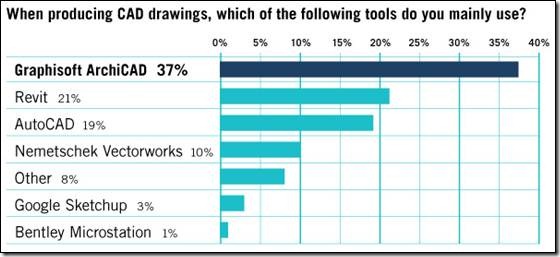
What percentage of respondents in the New Zealand National BIM Survey use ArchiCAD?

 37% of the respondents use Graphisoft ArchiCAD for their BIM solution.
(Extracted from New Zealand National BIM Survey 2012)


What is Cognitive Surplus?


The concept of Cognitive Surplus shows the ability of people of the world to volunteer on large scale problems and products and the availability of technology to link those individuals into cooperative work groups


What is the difference between the 20th century media and 21st century media?


20th century media helped people become good at consuming, however, in 21st century, media let us do more than consuming through internet, mobile phones etc. It resulted that people also want to create something and also share them with public not just consuming like 20th century.


What is design generosity?


Design generosity pursues more for the social benefits rather than economical benefits, and social science explains how important our intrinsic motivations are to us and how much we do things because we like to do them rather than they're told to do them or because we are being paid to do them.


What are social constraints?


 Social constraint creates a culture that is more generous than the contractual constraints do and it comes from human behaviour that we inherited in the 20th century which is that we are all rational, self- maximizing actors. 


What is communal value?


Communal value is created by the participants for each other on the networks. It is publicly available and seen everywhere every time whether it's photos on Flickr or videos on YouTube or whatever.


What is Civic Value?


Civic value is created by the participants but enjoyed by society as a whole. This value has a set goal for certain society which is not just to make life better for the participants, but make life better for everyone in the society.

First Half Media work

Collage 


Plan, Section drawing 


Axonometric drawing

Thursday, 17 May 2012

L2: Treehut

                             
                                         Ground Floor plumbing plan
Roof view
                         
                   Top view
                        
             Wall, door and window fenestration
                     
                         East elevation
                 
                           North elevation


West elevation

South elevation
Perspective
                     
                                Axonometric                           


                                                                                         .


Wednesday, 16 May 2012

L1

 I have activated myself on Secondlife. 


I can walk and fly


 Using the render tool/filter cast 3 coloured lights over it to generate a white light.


Make a dramatic lighting environment for your Avatar.


Find three useful and interesting websites/videos/wikis that tell you about Architecture in the Virtual World and/or how to make something in Second Life.
Video: Real Architecture in Virtual Worlds -  http://www.youtube.com/watch?v=XBtma6YXAis

Work out your team of three.
My team consists of me, Keun Hee Kim and Jiwon Won