What is a vector image?
Vector images are mathematical formulas. Because mathematics can be easily scaled, a vector image can be endlessly resized from without losing the quality or crispness of the image.
Common formats are AI, EPS and SVG.
Fonts are a prefect example of vector images. No matter how large the font is, it will always look sharp.
Vector images are generally filled with a solid colour or a gradient but it can't display the lush colour depth of a raster.

What is a raster image?
A raster image (also called bitmap) is a way to represent digital images. They are .gif, .jpg, bmp, tiff, png files.
When a raster image is created, the image on the screen is converted into pixels.
Each pixel is assigned a specific value which determines its colour.
Raster image system uses the RGB colour system.
When a raster image is viewed, the pixels smooth out visually for the user, who sees a photograph or drawing. When it's blown up, the pixels in a raster image become apparent.

What is a diagram?
A diagram is a figure and it usually consists of a line drawing, made to accompany and illustrate a geometrical theorem, mathematical demonstration etc.
It outlines and explains the parts, operation on a chart, plan or a scheme of a subject.
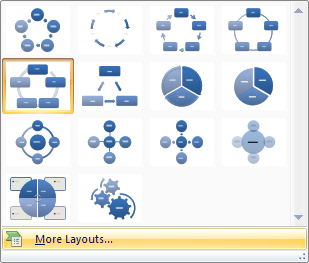
What matters most in high quality rendering?
Probably the material/texture is the thing that matters the most in high quality rendering. The texture is something that is directly seen from the rendered document and as it get more detailed and realistic the rendering will have higher quality. However, the lighting also matter a lot in high quality rendering so I cannot say easily what is the most important element in high quality rendering.
What is a digital rendering?
It is a process that involves using a software program to generate an image from a previously created model.
Digital rendering description includes viewpoint, geometry, lighting, and texture information.
The image that is created through digital rendering is referred to as a digital image or a raster image.
The image made through digital rendering is the last major step before creating the final appearance of models used in animation.
This animation is used in movies, video games, computer games, and simulators, and for special effects on television.
Features included in digital rendering are:
- Shading: brightness and colour
- Bump-mapping: simulated small scale bumpiness
- texture-mapping: method for applying detail
- Reflection: mirror like image
- Motion blur: the effect of blurriness from a fast moving object
- Fogging: the way light dims when it passes through air or atmosphere that is not clear
- Transparency: transmission of light through solid objects
- translucency: scattered transmission of light through solid objects
- Refraction: bending of light used with transparency
- Shadows: effect created by obstructing light
- Soft shadows: effect created by obstructing light
- Depth of field: blurry appearance of object because it is too far forward or behind to be in focus
Who is Cameron Sinclair?
Cameron Sinclair (b. 1973, London, England) is the co-founder and 'chief eternal optimist' (CEO) for Architecture for Humanity, a charitable organization which seeks architectural solutions to humanitarian crisis and brings professional design services to communities in need. He prototyped a building called the porchdog in Second Life lead by the Architecture in Virtual Worlds community. For more information: http://archvirtual.com/2010/06/24/construction-of-hurricane-katrina-relief-project-the-porchdog-prototyped-in-second-life-now-complete/
Who is Toyo Ito?
Toyo Ito (伊東 豊雄, Itō Toyo, born June 1, 1941) is a Japanese architect known for creating conceptual architecture, in which he seeks to simultaneously express the physical and virtual worlds. He is a leading exponent of architecture that addresses the contemporary notion of a "simulated" city, and has been called "one of the world's most innovative and influential architects."
What is Sendai Mediatheque?
Sendai Mediatheque is a library in Sendai, Miyagi Prefecture, Japan. It was designed by Toyo Ito in 1995 and completed in 2001.
The structure of the Sendai Mediatheque is composed of three main elements: tubes, plates and skin.
The plates (floor slabs) are composed of a layer of lightweight concrete sandwiched between steel skins. The concrete interior layer is essentially a honeycomb structure which allows the plate to span between irregularly spaced vertical supports without beams, and with minimal thickness of the slab itself. Each floor hosts a different set of the building’s many facilities which are more or less free to interact with each other over the surface of a given plate.
The skin, or facade treatment differs on all five exposed sides of the building, modulating light and views, creating a uniformity across each face of the cube during the day. The main (south-facing) facade is double-glazed and functions as part of the building’s climate control system. The materials which compose the skin range from glass, to steel panels, to aluminium mesh.
.


No comments:
Post a Comment